
Current Heart Attack Screening Tools Are Not Optimal and Fail to Identify Half the People Who Are at Risk
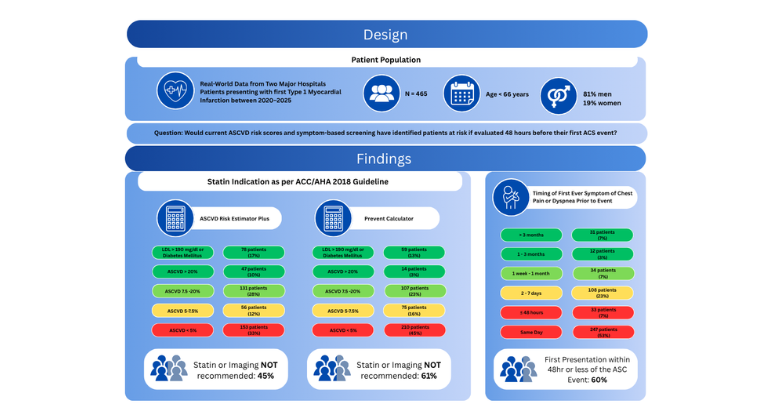
Mount Sinai study shows that traditional risk scores and symptoms such as chest pain should not be solely relied upon to prevent cardiovascular events.
Current cardiac screening tools used to prevent heart attacks fail to identify nearly half of the people who are actually at risk of having one, according to a new study led by Mount Sinai researchers. The results, published in a brief report on November 21, in the Journal of the American College of Cardiology: Advances, expose a major flaw in patient care: that following current screening guidelines may cause missed opportunities for early detection of heart attacks and prevention.
The researchers assessed the accuracy of a widely used tool, the atherosclerotic cardiovascular disease (ASCVD) risk score, and of a newer measure, called PREVENT, which adds variables and is intended to provide a more comprehensive estimate of cardiovascular risk along with symptomatic screening.